

.svg)
.svg)
.svg)
Build an Effective MVP Design That Supports Scalable Business Growth
.png)
Launching a product can be an exciting journey—but without the right strategy, it’s also a risky one. Many startups and businesses fail because they invest heavily in a full product before validating their ideas. This is where an MVP (Minimum Viable Product) comes in. When designed effectively, an MVP allows you to test your ideas, gather user feedback, and lay a strong foundation for scalable business growth.In this blog, we’ll explore how to build an MVP that supports growth, why it’s critical, and the best practices for success.
What is an MVP?
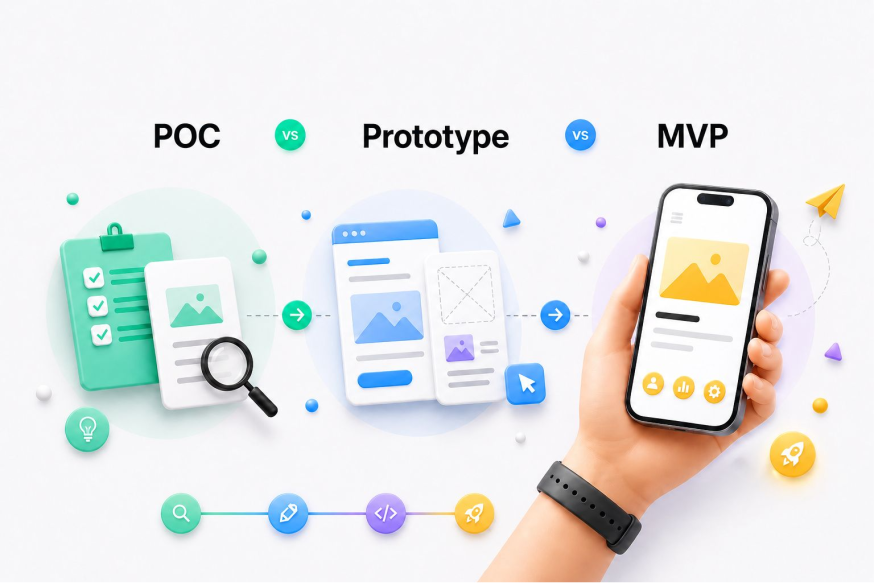
A Minimum Viable Product is a simplified version of your product that includes only the essential features needed to solve a problem for your users. The goal isn’t to launch a fully-featured product but to validate your idea with real users quickly and cost-effectively.Think of it as the first step in a larger product journey: you test, learn, and iterate before investing heavily in development.
.png)
Why an Effective MVP is Key to Scalable Growth
1. Reduces Risk
Building a full-fledged product without testing your assumptions can lead to costly mistakes. An MVP helps identify potential issues early, allowing you to pivot or improve based on real user data.
2. Validates Market Demand
Even the best ideas can fail if there isn’t a real market need. An MVP provides a low-cost way to confirm that users want your product and are willing to engage with it.
3. Optimizes Resource Allocation
Startups often operate on tight budgets. By focusing only on essential features, your team can spend resources wisely, develop faster, and achieve measurable results sooner.
4. Supports Iterative Growth
A well-designed MVP allows you to iterate quickly based on user feedback. Each update strengthens your product, prepares it for scaling, and ensures it meets your customers’ needs.
Key Steps to Building an Effective MVP
1. Define Clear Goals
Before you build anything, identify the core problem your product solves. Ask yourself: What is the main value proposition? What are the must-have features to test this value? Clear goals ensure that your MVP remains focused and avoids unnecessary complexity.
2. Understand Your Target Users
Your MVP must serve real people with real problems. Conduct user research, surveys, or interviews to understand their needs, pain points, and expectations. This insight shapes a product that resonates with your audience.
3. Prioritize Essential Features
An MVP isn’t about building everything at once. Focus on features that deliver the maximum value with minimum effort. These are the functions that directly address your users’ problems and help validate your idea.
4. Design for Usability
User experience is crucial. Even a simple MVP should be intuitive, easy to navigate, and visually appealing. A clean design encourages adoption, builds trust, and provides clear insights during testing.
5. Test Early and Iterate
Once your MVP is ready, test it with real users. Collect feedback, observe usage patterns, and identify friction points. Use this data to refine your product and add features gradually, ensuring scalability without unnecessary risk.
6. Plan for Scalability
Even though an MVP is minimal, it should be built on a flexible architecture that supports growth. Ensure your code, database, and design systems can adapt as user numbers increase and new features are added.
Common Mistakes to Avoid
⦿ Overbuilding: Adding too many features in the MVP stage can slow testing and dilute focus.
⦿ Ignoring Feedback: User insights are gold—ignoring them can lead to failure.
⦿ Skipping Design: A poor user experience can mislead feedback and reduce adoption.
⦿ Neglecting Scalability: Building a product that can’t scale means costly redevelopment later.
The Goal of an MVP
An MVP helps businesses answer the most important question in product development:
Do people actually want this product?
.png)
Conclusion:
Building an effective MVP is not just about creating a product—it’s about laying the foundation for scalable business growth. By focusing on core features, validating your ideas early, and iterating based on user feedback, your MVP becomes a launchpad for a successful product that grows with your business.Remember, the goal is to test, learn, and evolve—and with the right approach, your MVP can transform your idea into a thriving, scalable product.