


.svg)
.svg)
.svg)
MVP vs Prototype vs Proof of Concept: Choosing the Right Product Validation Strategy
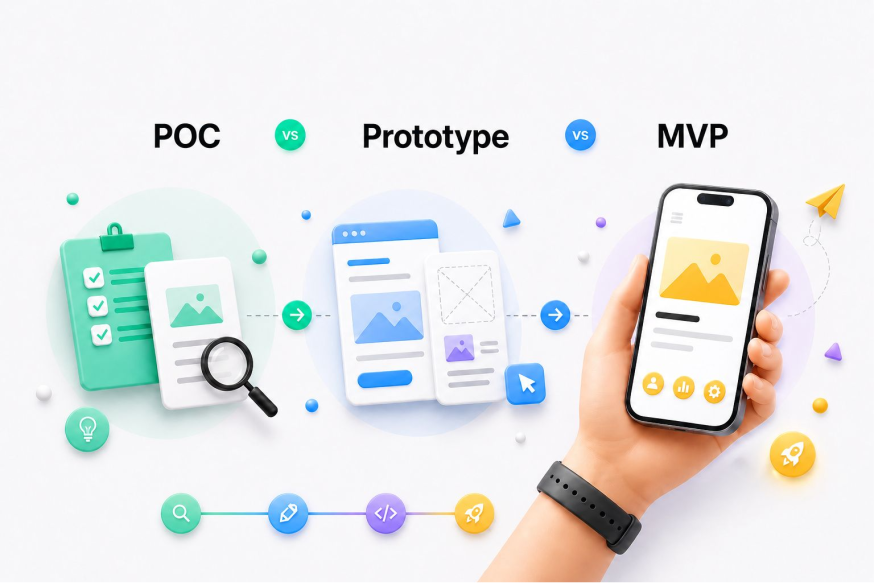
Building a successful digital product is not just about having a great idea - it’s about validating that idea efficiently before investing significant time and resources. Startups, founders, and product teams often come across terms like Minimum Viable Product (MVP), Prototype, and Proof of Concept (PoC) during the early stages of product development.Although these approaches are closely related, they serve different purposes in the product development lifecycle. Understanding when to use each one can help businesses reduce development risks, validate market demand, and launch faster.
In this guide, we’ll explore the differences between MVP, Prototype, and Proof of Concept, how they fit into the product development process, and which approach is best for your business.
Understanding Product Validation in Modern Product Development
Before investing in a full-scale product, companies need to answer three important questions:
- Is the idea technically possible?
- Will users understand and enjoy the product experience?
- Is there real demand for the product in the market?
This is where PoC, Prototype, and MVP come into play. Each step focuses on validating a different aspect of the product idea.

Proof of Concept (PoC): Testing the Technical Feasibility
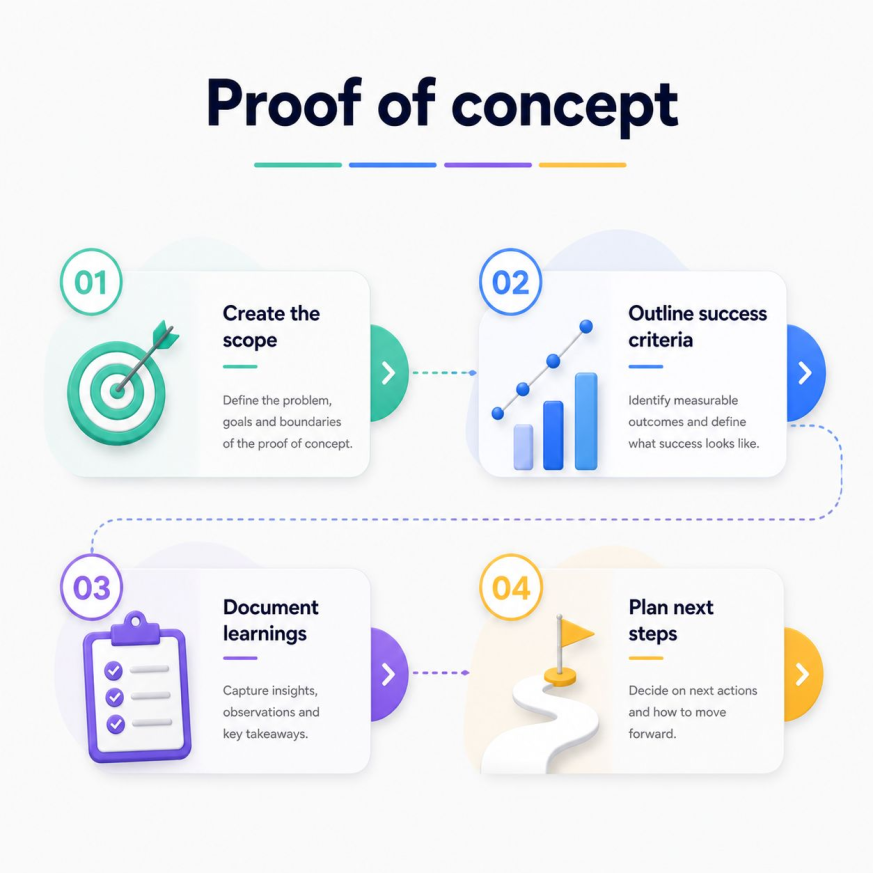
A Proof of Concept (PoC) is the earliest validation stage in the product development journey. It focuses on determining whether a specific technology, system, or concept can actually work in practice.
Instead of building a full product, a PoC involves creating a small experimental version that tests the technical foundation of the idea.
Key Purpose of a Proof of Concept
The main goal is to answer a simple question:
Can this technology or solution actually be built?
When Businesses Use a PoC
Companies typically develop a PoC when:
- They are exploring new technologies or complex systems
- The product depends on untested algorithms or integrations
- Investors or technical teams need technical validation before funding development
Example Scenario
Imagine a FinTech startup that wants to use blockchain to speed up international payments. Instead of building the
entire platform immediately, the team creates a small PoC to test blockchain transaction speed and security first.
If the experiment succeeds, they move forward with product design and development.
Prototype: Visualizing the Product Experience
Once the technology is validated, the next step is understanding how the product will look and function for users. This is where a Prototype becomes essential.
A prototype is a visual or interactive representation of a digital product that demonstrates its user interface (UI) and user experience (UX). Unlike a PoC, a prototype focuses on design, user flow, and interaction rather than full functionality.
Prototypes can range from simple sketches to advanced interactive models created with design tools.
Why Prototypes Are Important
Prototyping allows teams to:
- Test user experience and usability
- Collect feedback from potential users
- Improve the product design before writing code
- Present clear product concepts to stakeholders or investors
Example Scenario
A startup building a food delivery app might create a clickable prototype in Figma that demonstrates how users browse restaurants, place orders, and track deliveries. Even though the app isn't functional yet, stakeholders can experience the product flow and suggest improvements.
This approach significantly reduces costly design changes later in development.
Minimum Viable Product (MVP): Launching with Core Features
After validating both technology and user experience, the next step is launching a real product that users can interact with. This is where the Minimum Viable Product (MVP) plays a critical role.
An MVP is a functional product that includes only the essential features required to solve the core problem. Instead of waiting months or years to build a perfect product, companies launch an MVP to test market demand quickly.
The Goal of an MVP
An MVP helps businesses answer the most important question in product development:
Do people actually want this product?
Why Startups Build MVPs
Launching an MVP allows businesses to:
- Validate market demand with real users
- Attract early adopters and potential investors
- Collect real user data and feedback
- Improve the product through iterative development
Real-World Example
Before becoming a global cloud storage platform, Dropbox validated its idea using a simple demonstration video that showed how the product would work. This early MVP approach helped them confirm that users were interested before investing in full development.
How MVP, Prototype, and PoC Fit Into the Product Development Process
Each of these approaches represents a different stage of product validation.
- Proof of Concept (PoC) focuses on technical feasibility.
- Prototype focuses on user experience and design validation.
- MVP focuses on market validation with real users.
Together, they form a smart product development strategy that minimizes risk and maximizes learning.
Why Early Product Validation Saves Time and Money
Many startups fail because they invest too much time building products without validating the idea first. Using the right validation strategy helps teams:
- Reduce development costs
- Avoid building unnecessary features
- Launch products faster
- Gather valuable user insights
For startups and businesses, this approach is often the difference between building a successful product and wasting valuable resources.
Final Thoughts
Successful digital products rarely start fully developed. Instead, they evolve through strategic validation stages.
- Proof of Concept confirms whether the idea is technically possible.
- Prototype shows how the product will look and function.
- Minimum Viable Product validates whether users actually want it.
By understanding these stages and applying them correctly, businesses can build smarter products, reduce risk, and launch faster in competitive markets.
.png)